
Lafayette County 24 Hour Booking Records
Lafayette County 24 Hour Booking searches start at the custody stage because the county does not publish an online roster. A quick phone call is usually the fastest way to confirm whether the person is still held, whether a bond has been set, or whether the booking has already shifted into another stage. The county also supports written follow-up when you need the record itself. That makes the search usable, but it rewards a simple, exact request.
Lafayette County 24 Hour Booking Search
The sheriff page at lafayettecountywi.org/sheriff is the county source for a Lafayette County 24 Hour Booking question. Because there is no online roster, the office itself is the live custody check. That matters when you need to know whether a person is still at 318 Alma St, whether a bond has been set, or whether the booking has already moved into another stage. The county research gives you both a phone number and an email address, which makes the sheriff side the fastest place to start.
Lafayette County also expects written requests when you need a formal follow-up, and the response window in the research notes is about five to seven days. That does not mean the office is slow. It means the county is using a paper-friendly process that works better when you name the person, give a rough date range, and ask for the specific record you want. For a live phone question, that would be overkill. For Lafayette County 24 Hour Booking records, it is the right way to ask for copies or a more complete answer.
Once the booking turns into a court matter, Wisconsin Circuit Court Access at wcca.wicourts.gov is the first public summary layer. If you want the broader court search entry point, the Wisconsin Court System case search page at wicourts.gov/casesearch.htm is the same official doorway from another angle. Lafayette County 24 Hour Booking searches work best when the jail question stays with the sheriff and the filed case question moves to WCCA and the clerk.
Lafayette County Jail Records
The Lafayette County jail side is a real-time record, not a public roster page. That means a live call can tell you more than a web search when the booking is recent. The sheriff office can confirm whether the person is in custody, whether the booking is still active, and whether you should move to a clerk request next. For a Lafayette County 24 Hour Booking search, that is the fastest public answer because it avoids guessing about a record that has not been pushed online.
The sheriff contact details also matter because they show how the live custody record is handled. The sheriff email at sheriff@lafayettecountywi.org is useful for a written follow-up, the phone number is useful for a quick status check, and the jail address gives you a place for mail or in-person contact if that is the better route. The county does not publish a roster, so the office is the record gateway. That is a common Wisconsin model in counties that want the jail desk to answer directly instead of leaving the public to sort through a dashboard.
If the person has already moved from jail status to court status, the clerk of circuit court is the next public source. The clerk phone line at (608) 776-4855 helps with case questions, copy requests, and the paper file after the booking becomes a court matter. Lafayette County 24 Hour Booking requests stay easier when you treat the sheriff as the custody office and the clerk as the file office. The county's five-to-seven day response window also makes the request stage feel more formal than a quick phone lookup, so it helps to be exact from the start.
The Lafayette County sheriff page at lafayettecountywi.org/sheriff is the source for this county image.
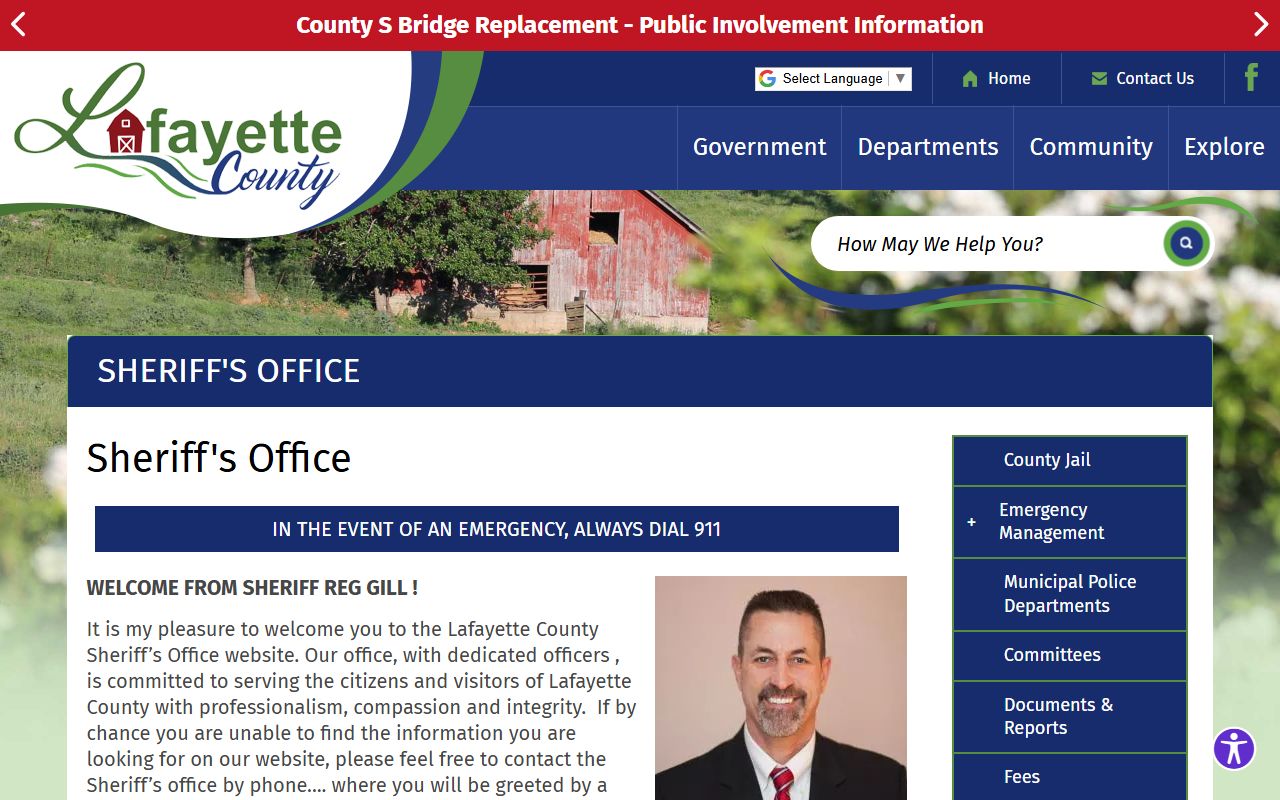
It fits a county that handles the live custody question by phone before the public search moves toward the court file or written request stage.
Using WCCA And DOC In Lafayette County
Lafayette County 24 Hour Booking searches stay clearer when the county offices and state tools work together. WCCA is the main public court lookup, and it is usually the first place to check if you already have a name or case number and want the docket summary before calling the clerk. That is especially helpful in Lafayette County because the sheriff handles the live custody question while the court record lives elsewhere. The search gets faster when you know whether you are looking for jail status or a filed case.
If the person has left county custody, the Wisconsin DOC offender locator becomes the stronger follow-up tool. The locator itself is at appsdoc.wi.gov/lop/welcome, and the results page at appsdoc.wi.gov/lop/results helps confirm whether the person moved from Lafayette County to a state facility or another placement. That matters when the county no longer has the live answer.
VINE is another official tool that belongs in the county search. The statewide service at vinelink.com helps track custody changes, and the Wisconsin State Law Library prisons guide at wilawlibrary.gov/topics/justice/crimlaw/prisons.php and the Wisconsin Sheriffs Association at wsdsa.org are both useful official references when you want to understand the custody trail beyond the county line.
Lafayette County Access Rules
Wisconsin's open records law at docs.legis.wisconsin.gov/statutes/statute/19 is the basic access rule for Lafayette County 24 Hour Booking records. It gives the public broad access to government records unless a specific exception applies. That is why the sheriff page, the clerk contact, and WCCA all fit into one search path. The county does the local work. The state law sets the access rule. Once you know that, the search is easier to place.
The sheriff role in county jail operations is tied to Wis. Stat. 59.27. That statute helps explain why the jail side belongs with the sheriff while the court file belongs with the clerk. For Lafayette County 24 Hour Booking requests, that legal split is the practical split too. You look to the sheriff for custody, to the clerk for the case, and to WCCA for the public summary that helps connect the two. The county does not need a roster page to remain public. It needs an office that can answer the request and a reasonable process for written follow-up.
The county procedure in the research notes also matters. Lafayette County uses written requests and the notes say to expect a response in five to seven days, which means the formal request stage is part of the normal workflow rather than a backup plan. If the booking is current, the sheriff is the fastest source. If the booking has become a case, the clerk is the better source. If the person has moved beyond local custody, DOC and VINE can fill in the gap. That is the cleanest way to move through a Lafayette County 24 Hour Booking search without wasting time.
Lafayette County Follow Up
A good Lafayette County 24 Hour Booking follow up is simple. Call the sheriff if the person may still be in custody. Check WCCA if the booking may already have become a case. Call the clerk if you need the paper file or a copy request. If the county wants the request in writing, send it that way and expect the response window the research notes describe. That order fits the county notes, the court system, and the state access rules. It also keeps the request tied to the office that can actually answer it.
The county contact options make that follow up easier than it sounds. Lafayette County gives you the sheriff page, a direct jail phone line, a sheriff email, and a clerk phone number, so the search can move from custody status to case status without leaving official sources. If you need help understanding what appears on a docket, the Wisconsin Court System records page at wicourts.gov/courts/offices/records.htm adds useful context before you make the next local call. That is often enough to decide whether a phone call or a written request comes next.
If the person leaves county custody, move to DOC and VINE. If the case stays local, keep the search with the sheriff, the clerk, and WCCA. Lafayette County gives you enough official contact to make that work without hunting across a lot of pages. A quick phone check, a short docket review, and a clear written request usually cover most of the public record path.